Blois Railway Station in the Early 20th Century
Geographic description
Blois railway station in the early 20th century is shown here from its forecourt, offering a close view of the imposing passenger building. The station stands west of the historic centre of Blois, in the Loir-et-Cher department of central France, on the railway corridor connecting cities including Orléans and Tours. It is now officially known as Blois-Chambord station.
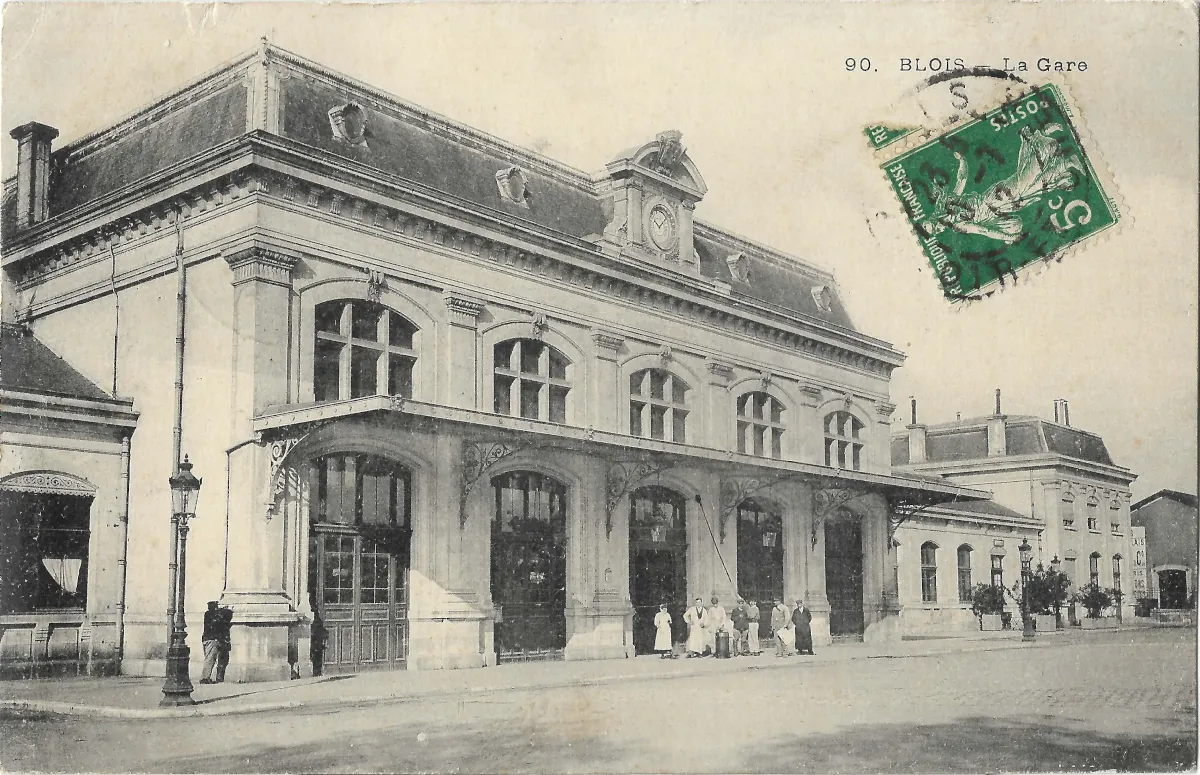
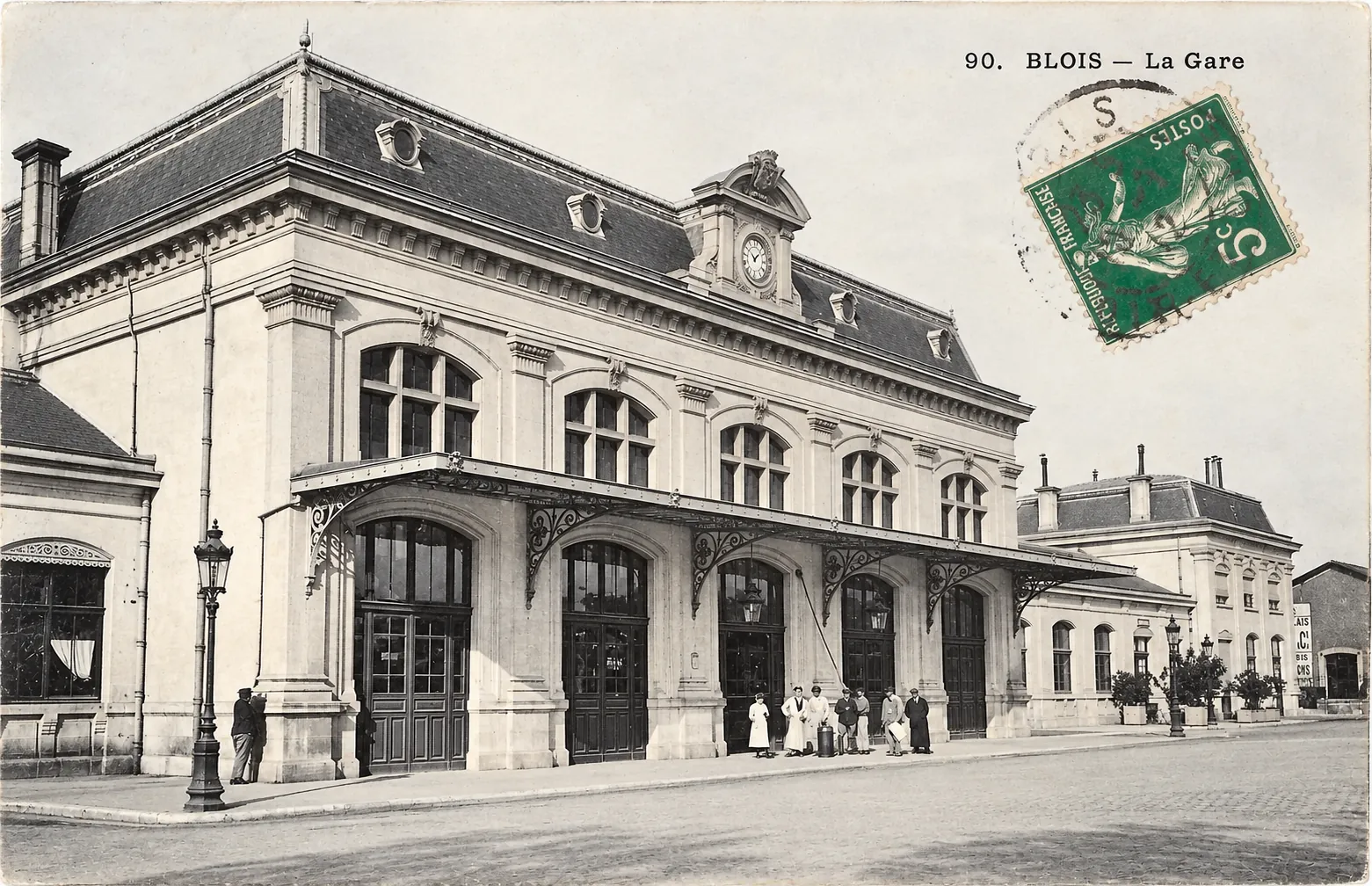
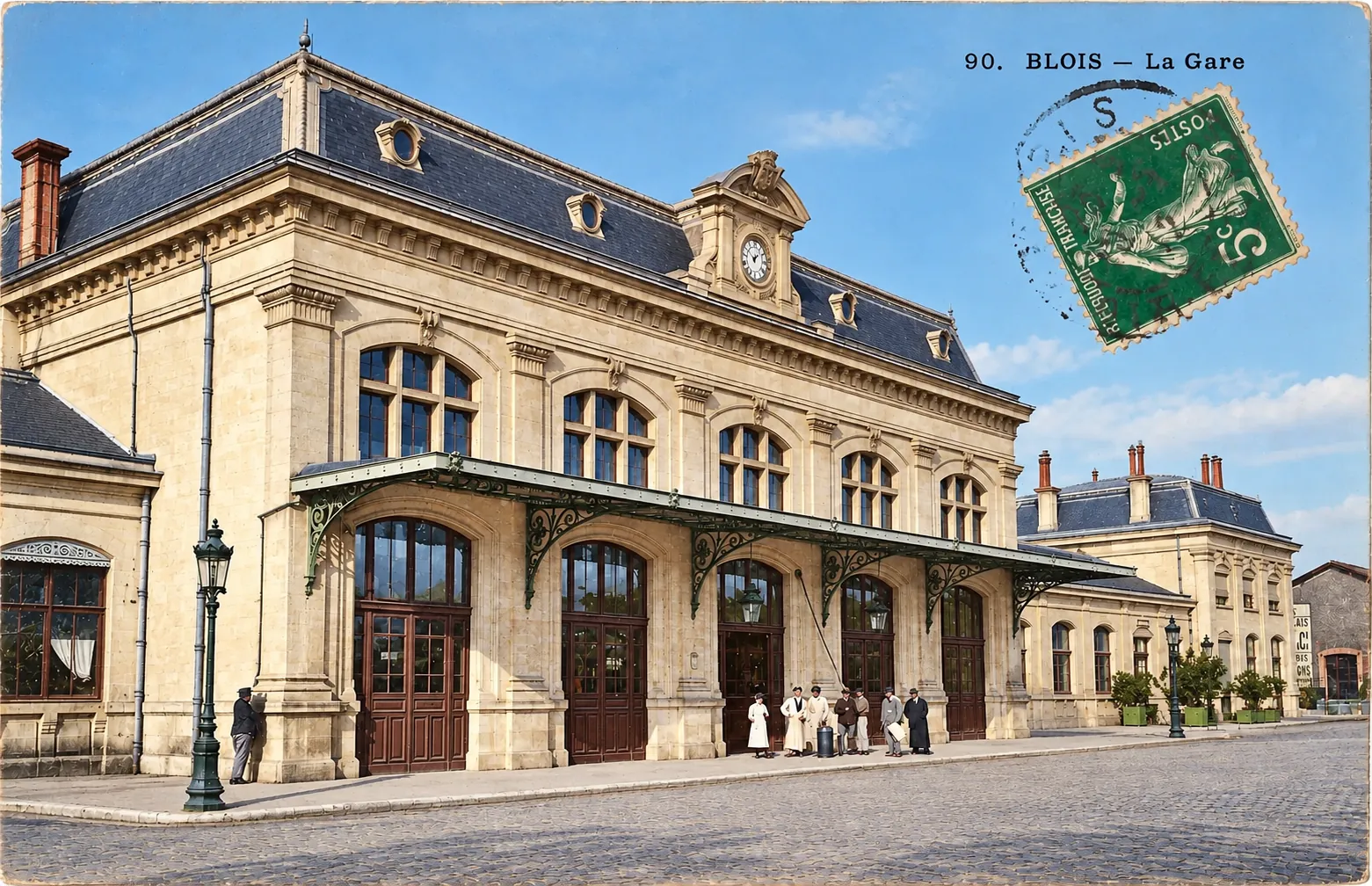
The main station building dominates the photograph. Its carefully balanced façade features a series of large arched openings at ground level, providing access to the passenger areas. Tall arched windows continue the architectural rhythm on the upper floor. Above them rises a substantial mansard roof punctuated by decorative dormers.
At the centre, a pediment containing a clock rises above the roofline. Such clocks were both practical and symbolic features of railway architecture at a time when standardized railway timetables increasingly governed everyday travel.
A long metal canopy runs along the façade above the entrances. Its elaborate iron brackets illustrate the growing use of metal structures in late nineteenth-century railway architecture, while the masonry façade retains the formal symmetry and decorative vocabulary of classical architecture. This combination was characteristic of many substantial French passenger stations of the period.
Several people are gathered outside the entrances, with some apparently posing for the photographer. Their presence provides a useful sense of scale and emphasizes the generous proportions of the ground-floor openings. An ornate street lamp standing to the left is another noteworthy feature of the station forecourt.
The area immediately in front of the building appears exceptionally open. No motor vehicles can be seen, and there is virtually no visible traffic. The uncluttered foreground gives the station an imposing presence quite different from that of a modern urban transport hub, where cars, buses, road markings, signs and passenger facilities tend to occupy much of the surrounding public space.
Construction of the station also had a significant effect on the layout of Blois. According to the municipal archives, the new station was built between 1889 and 1893 and was accompanied by a broader redevelopment of the surrounding district, including new roads, a bridge across the railway and new residential and industrial buildings. Its location also interrupted the historic axis of the Allées, which had linked the château area with the forest of Blois.
Historical description
The station shown on this postcard was not the first railway station in Blois. Rail transport reached the city in 1846 with the opening of the Orléans–Tours line. An earlier station, then described as an embarcadère, stood farther north and had been designed by architect Édouard Massé. The first train passed through Blois on 23 March 1846, followed three days later by an inaugural service.
As railway traffic expanded and additional lines were developed, the original facilities eventually became inadequate. A new station was therefore constructed between 1889 and 1893, west of the earlier building. This is the station represented on the postcard and the historic core of the present-day railway complex. The Blois municipal archives list the construction of the new station in 1893 among the significant events in the city’s history.
The photograph must therefore date from after this reconstruction. Several visual features suggest an early twentieth-century postcard: the monochrome photographic presentation, the clothing of the figures, the complete absence of motorcars and the relatively undeveloped appearance of the forecourt. These details support an approximate period rather than a precise year.
A further chronological clue is provided by the green French 5-centime Semeuse stamp attached to the front of the postcard. Part of its postmark remains visible, although not clearly enough to establish a reliable postal date. It would therefore be unsafe to assign a specific year from the cancellation alone. Nevertheless, the stamp, postcard format and visual appearance of the scene are consistent with circulation during the early decades of the twentieth century.
By then, the railway had already played a major role in the transformation of Blois. Regular railway services had begun in April 1846, integrating the city into the route between Orléans and Tours. Municipal archive material also records how the arrival of the railway encouraged westward urban development and contributed to the establishment of industrial activities in this part of Blois.
The postcard is therefore more than a portrait of a railway building. It also documents a period when stations represented modernity and economic connection. Their monumental architecture gave them the status of civic gateways, creating an impressive first view of the city for passengers arriving by train.
The building continues to serve its original purpose today as Blois-Chambord railway station. Rail services still connect Blois with destinations including Orléans and Tours, while the station also acts as an important gateway for visitors travelling toward major attractions in the Loire Valley, including the Château de Chambord.