Antique Postcard Central Park New York: Terrace Steps
Geographic description:
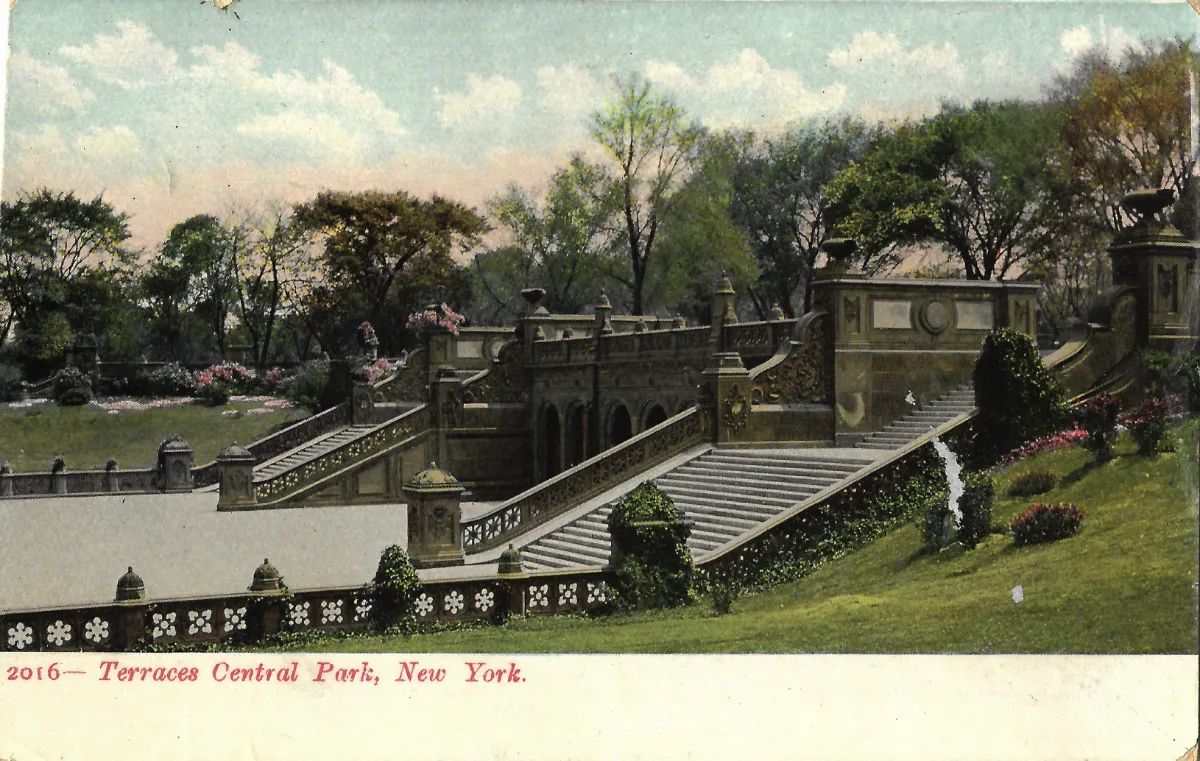
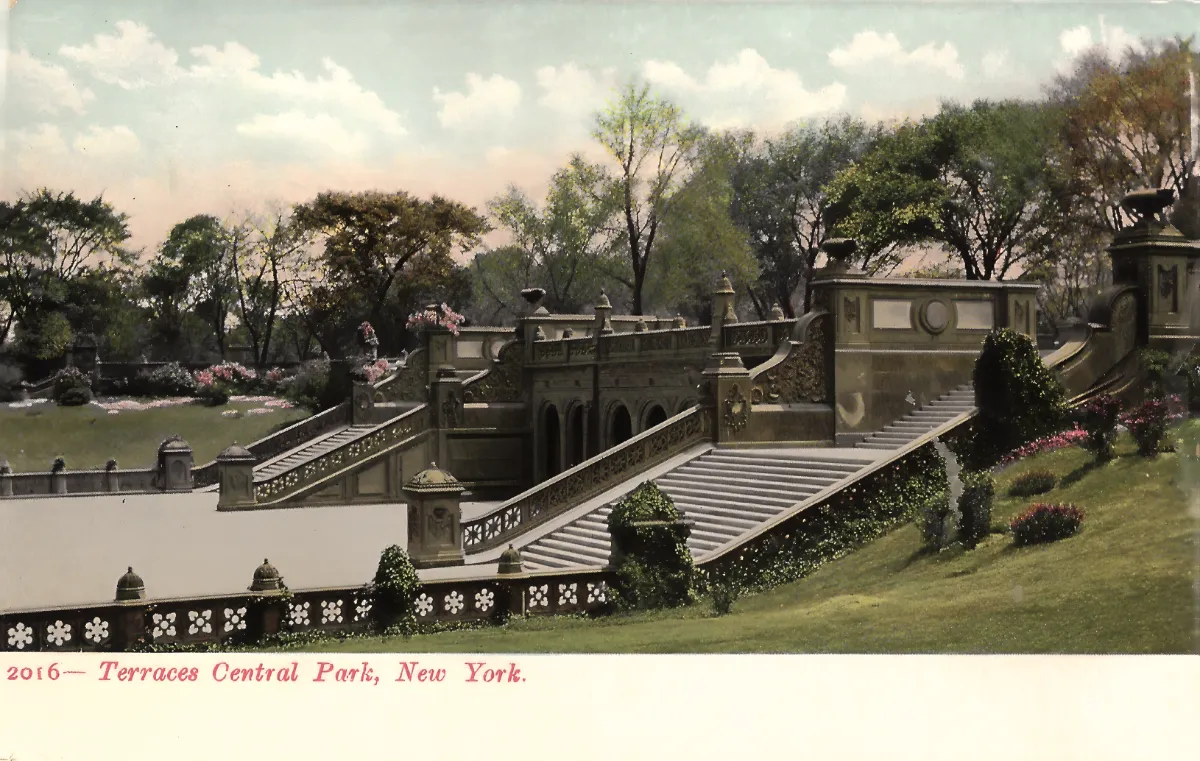
This antique postcard Central Park New York depicts the monumental terrace complex located in the middle section of the park, almost certainly the architectural ensemble known as Bethesda Terrace, one of the centerpiece structures of Central Park. The image shows a wide double staircase built in stone, fanning out from an upper platform down to a lower esplanade, framed by ornate balustrades and piers topped with decorative urns. At the center of the composition stands a richly carved retaining wall, pierced by three round-arched openings that most likely lead to a passage or lower arcade allowing visitors to walk beneath the terrace itself. The printed caption at the bottom of the card, “Terraces Central Park, New York,” together with the edition number 2016, confirms without ambiguity the location shown.
The visible architecture features highly detailed limestone or sandstone carving: sculpted friezes, circular medallions, molded cornices, and stylized foliage motifs decorate the central wall and the parapets. This level of ornamental refinement is typical of the great American landscaped parks of the second half of the nineteenth century, designed to combine prestigious architecture with a public green space. On either side of the staircase, the vegetation is dense: tall deciduous trees, and beds of pink and white flowers visible on the lawn to the left, along with rounded clipped shrubs framing the flights of steps. On the right side of the image, a thin vertical white shape is visible at ground level; this could be a small ornamental fountain or a lawn sprinkler, though this remains a hypothesis, since no element of the image allows for a definitive identification.
The low white stone wall decorated with four-petaled flower motifs, visible in the foreground, likely borders a walkway or pedestrian path running alongside the lower terrace. This low openwork balustrade completes the architectural ensemble and reinforces the presentation of the site as a place for strolling and quiet contemplation. No figures appear on the card, which means there are no clothing details available to help with dating, unlike other postcards from the same period where the presence of pedestrians can help narrow down the timeframe.
Historical description:
A precise dating of this postcard can only rely on indirect clues, since the reverse side is not included in this analysis: the absence of a postmark, stamp, or handwritten message rules out any confirmation through postal context. The following points should therefore be read as reasoned hypotheses rather than established facts.
The color printing process, with its pastel tones and a rendering that suggests hand-tinting applied over a black-and-white photograph, corresponds to a widely used practice in American tourist postcard publishing roughly between 1900 and 1915. The elegant pink-red italic typeface used for the caption, along with the edition number “2016” preceded by a dash, is consistent with the numbering conventions used by major postcard publishers of urban views and park scenes during that period. The publisher’s name is not legible on this side of the card, so its identity remains undetermined; consulting specialized archives of early twentieth-century American postcards would likely help confirm it.
On a broader historical level, this terrace is part of the most ambitious architectural features built within Central Park during its construction, which began in the late 1850s according to the overall design plan drawn up by the landscape architects responsible for the park. The sophistication of the carved decoration, with its arches and stone balustrades, reflects the designers’ intent to give New Yorkers a public space combining landscaped nature with architectural prestige, at a time of rapid urban growth in the city. By showcasing this monumental ensemble, the postcard fits within the broader tradition of view-cards intended for visitors and residents wishing to share an iconic image of their city or keep a souvenir of their visit to this particular spot.
The absence of automobiles or any other sign of modern traffic within the frame does not, on its own, help refine the dating, since the area shown is a pedestrian zone of the park where vehicles would not have been visible regardless of the exact date. Likewise, the state of the vegetation, while dense and in bloom, does not provide a precise enough seasonal clue to pinpoint the month in which the original photograph was taken. Based on the elements available on the front of this antique postcard Central Park New York, a broad dating range between 1900 and 1915 appears to be the most reasonable hypothesis, though it cannot be narrowed further without access to the reverse side or additional archival sources.