Nantes Suspended Above the Loire — The Transporter Bridge Gondola
Collection F. Chapeau, Nantes — Series no. 80, 4th thousand — c. 1905–1910
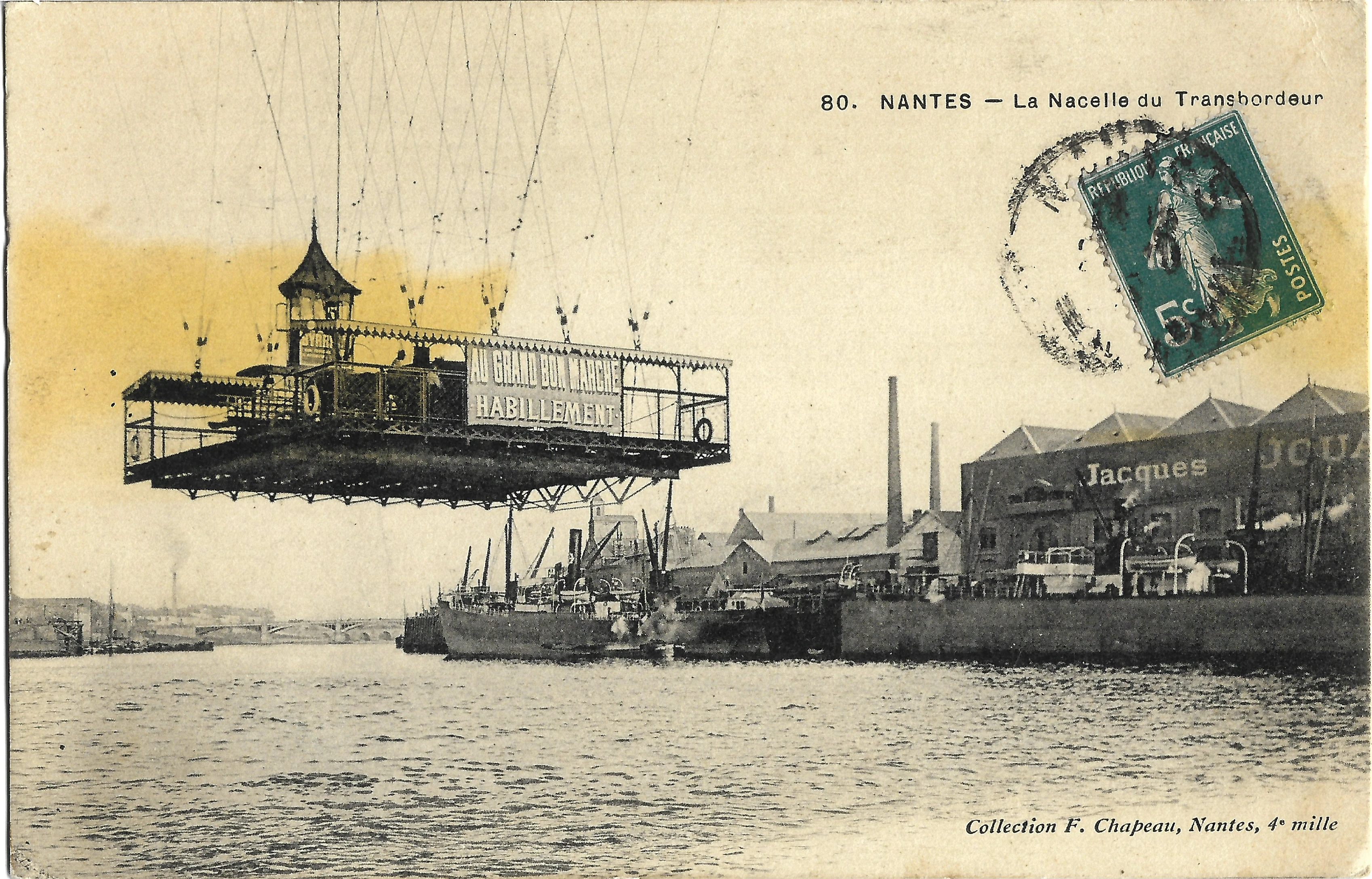
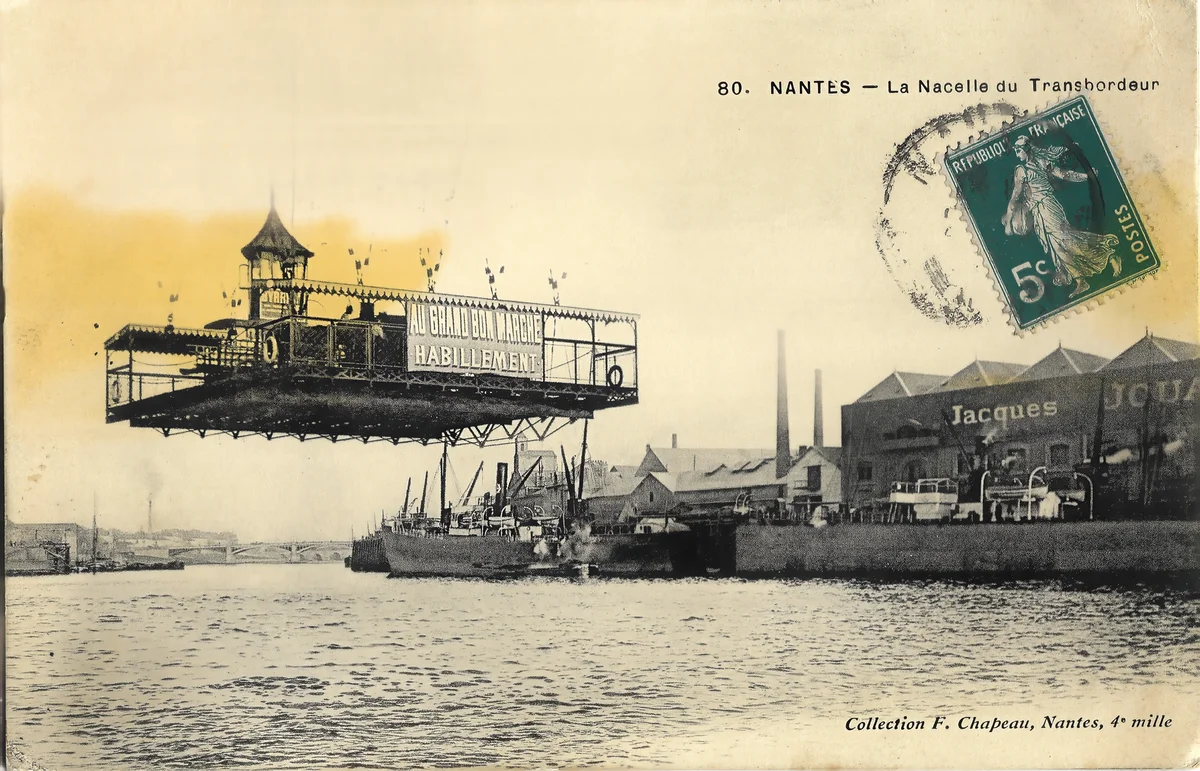
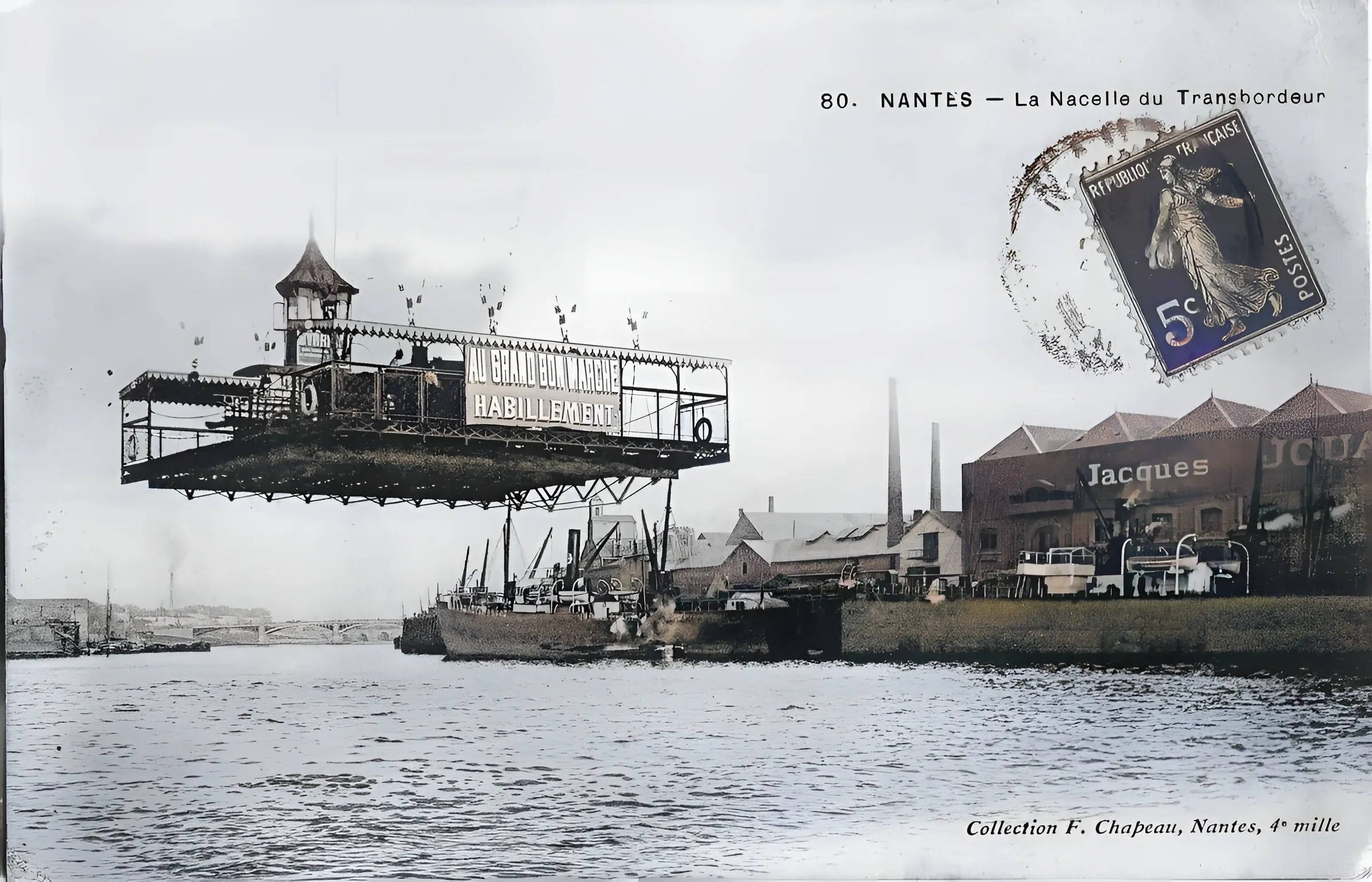
At first glance, the scene has something almost surreal about it: a vast metal platform appears to hover in mid-air above the Loire, as though defying gravity. Yet this was a very real Nantes landmark — and a source of considerable civic pride: the gondola of the transporter bridge, that remarkable feat of industrial engineering inaugurated in 1903. Suspended from a tall steel lattice structure visible just beyond the frame, this moving platform glided from one bank to the other, carrying pedestrians, vehicles and goods without obstructing river traffic — for the Loire at this point remained a busy commercial waterway, as the steam vessel moored below attests. The photograph is taken from the river itself, which gives the gondola its uncanny, almost gravity-defying appearance.
What catches the eye next is the advertising painted in bold letters along the side of the platform: “Au Grand Bon Marché — Habillement” (At the Great Bon Marché — Clothing). Far from being a mere curiosity, this commercial signage perfectly captures the spirit of the age: the surfaces of technological modernity had become advertising spaces. The Grand Bon Marché was one of those large provincial department stores that, following the model of the famous Parisian Bon Marché, sought to attract a clientele ranging from the bourgeoisie to the working class. On the far bank, warehouses and industrial sheds line the waterfront, with the sign “Jacques” — likely a merchant or shipowner — a reminder that Nantes lived and breathed maritime trade.
The card was published by F. Chapeau, one of the most prolific postcard publishers in Nantes at the turn of the twentieth century, whose numbered series methodically documented the city and its surroundings. The notation “4e mille” (4th thousand) indicates this was the fourth print run of a thousand copies — a sign of the commercial success enjoyed by this view, arguably one of the most striking in the entire collection. The base photograph, originally black and white, has been enhanced with a warm ochre-yellow tint in the upper left — a common technique of the period used to add visual appeal to otherwise stark images. The green 5-centime Semeuse stamp, visible in the upper right with its postmark, allows the card to be dated to approximately 1907–1914.