Neuilly-sur-Seine — The Château de Madrid and Its Legendary Oak
Publisher A. C. Paris series, no. 3 — Estimated date: 1900–1915
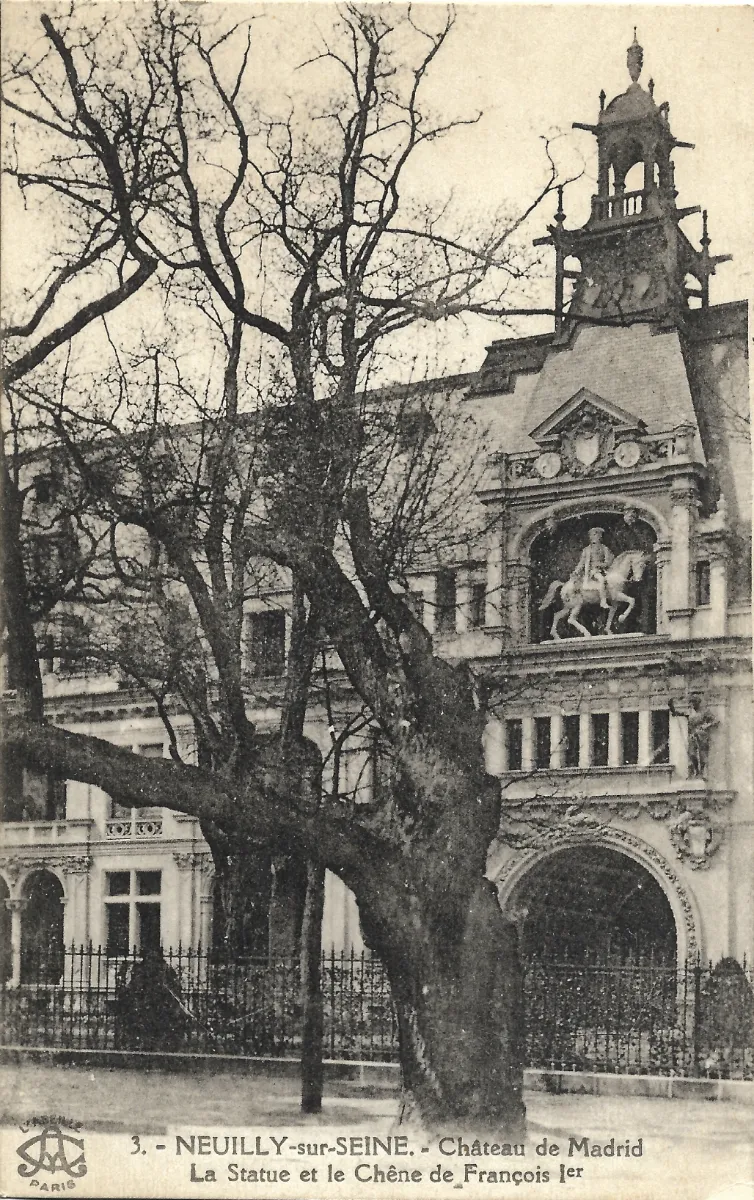
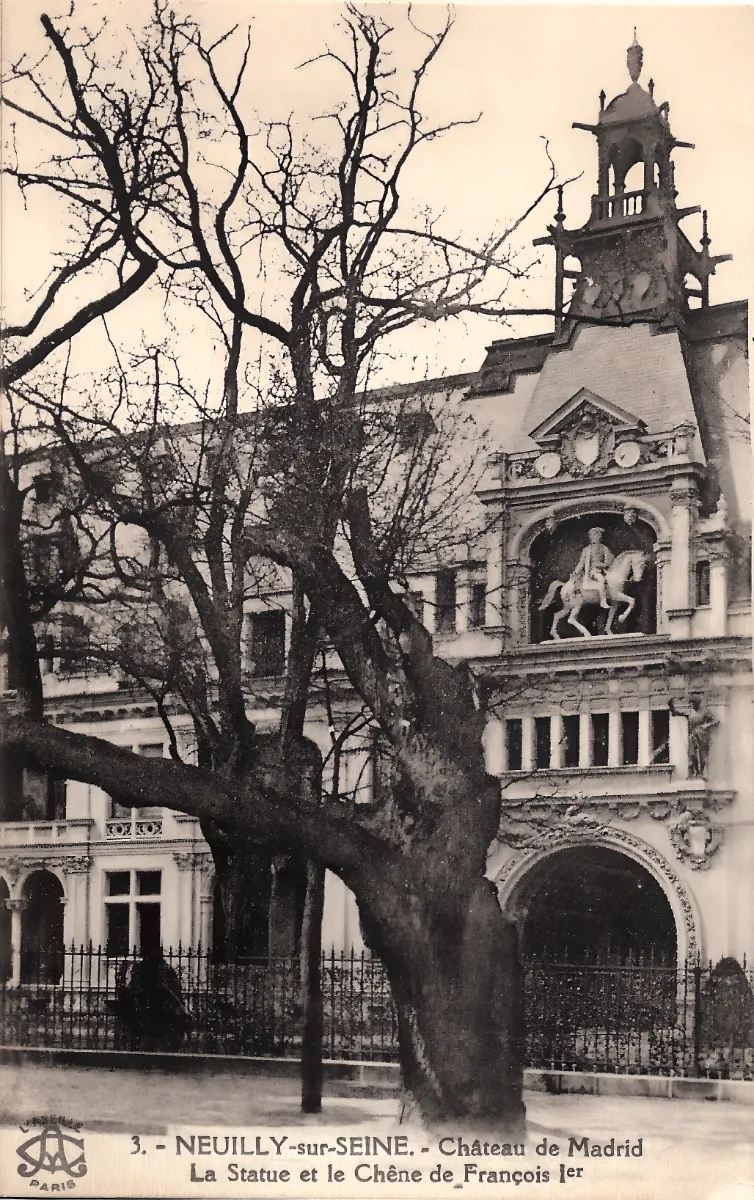
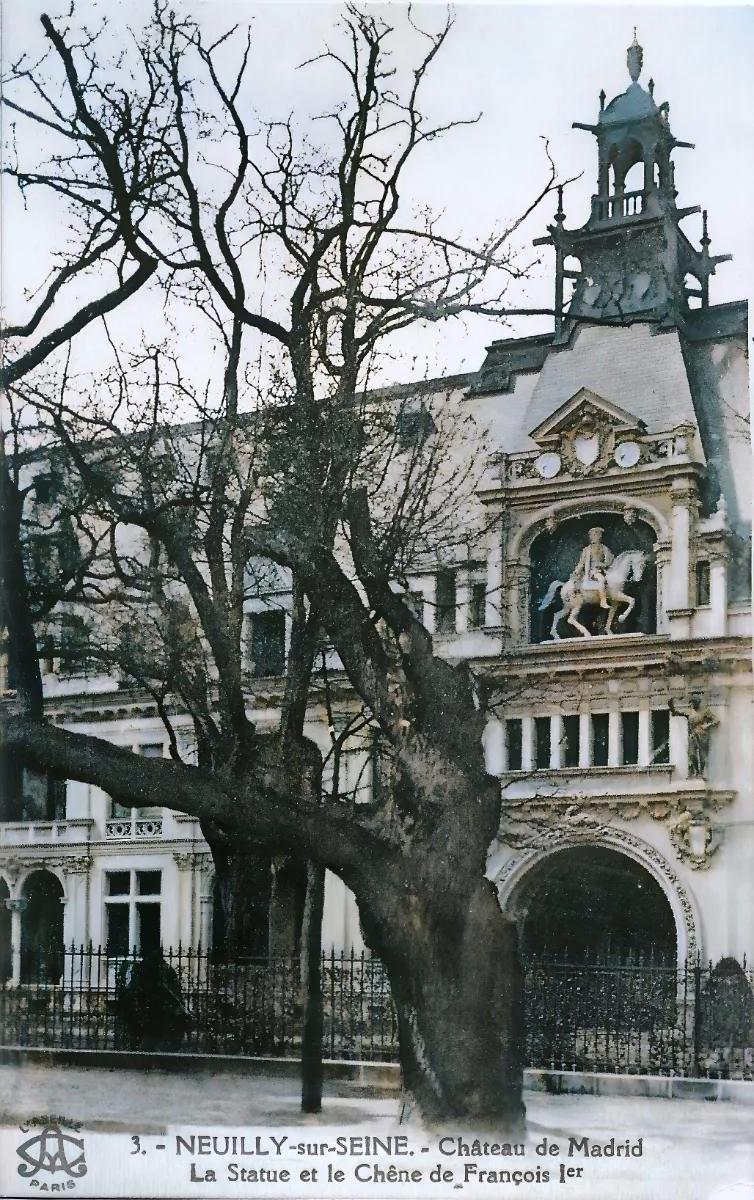
In the foreground of this austere winter photograph stands a gnarled oak tree, its bare branches twisting across a pale sky like dark calligraphy. This is no ordinary tree: local tradition identified it as the “Oak of François I,” a supposed remnant of the Boulogne forest where the king hunted in the sixteenth century. Whether genuinely ancient or merely mythologised, its placement at the foot of the château lends the scene a romantic gravitas that the photographer clearly embraced — the tree deliberately occupies half the composition, almost more commanding than the building behind it.
That building is the Château de Madrid, an edifice with a history as remarkable as its name. Originally built under François I from 1528 onwards, within the Bois de Boulogne, it was said to have been inspired by the palace in Madrid where the king was held captive by Charles V following his defeat at the Battle of Pavia in 1525. The façade visible here, however, is a nineteenth-century reconstruction: the original château fell into ruin after the Revolution and was demolished in 1792, and what appears on this card is an ornamental rebuilding in the Renaissance spirit — complete with a niche containing an equestrian statue (presumably representing François I himself), pilasters, medallions, and a lantern-topped campanile. The whole composition evokes a stage-set version of the royal past, simultaneously genuine in aspiration and theatrical in execution.
Technically, the card was published by A. C. Paris, the recognisable monogram of Armand Collignon, a Parisian publisher active around the turn of the twentieth century. The black phototype printing gives the image its characteristic velvety grain and deep grey tones. The winter framing — bare branches, cold flat light, a lone dark figure barely visible at the lower left — heightens the melancholy mood and, almost inadvertently, makes the oak the true subject of the image. The number “3” indicates a place within a Neuilly-sur-Seine series, presumably covering the town’s principal monuments and notable views.